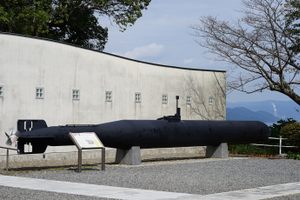

After total loss was narrowly avoided in the battle in the Pacific Ocean in 1944, the Japanese Navy took a torpedo station in the Seto Inland Sea and converted it into a training facility for a suicide-squad of manned torpedos.
Undergoing hard physical and psychological drills, the young volunteer soldiers, mostly under 25, were prepared to be locked into a 8-meter torpedo and launch themselves into the enemy fleet. In the end, “the most effective” weapon against the American Navy accounted for only two officially documented vessels sunk — in stark contrast to their own numerous losses in the field and in training accidents. In fateful irony, the head developer of the program himself died while doing a test routine.
After the war ended in August 1945, a former soldier gathered memories of his colleagues like photographs, drawings, and goodbye letters — some of them written in blood. To keep them from being destroyed by the occupation forces, he temporarily buried this collection in a secret location. Later, the collection was added to with more private objects from the bereaved families and interviews of surviving soldiers.
The Kaiten training facility was officially turned into a museum in 1968 and serves as testimony of the unsettling cruelty of fanaticism.