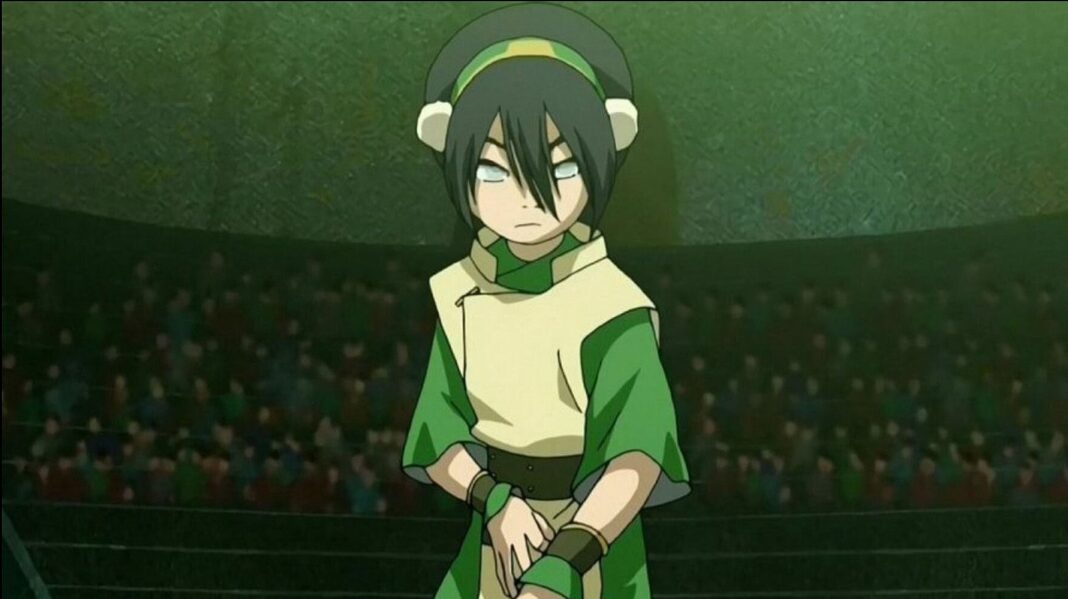

Water. Earth. Fire. Air. Each bending style in “Avatar: The Last Airbender” features a unique style of martial arts that encapsulates its fighter’s personalities. The nomadic airbenders travel the skies like Buddhist monks, their bending as smooth and light as a cloud. Waterbenders flow like a shimmering stream, and firebenders produce bursts of burning hot energy, torching anyone who stands in their way. But for the sturdy earthbenders, the “Avatar: The Last Airbender” creative team took inspiration from a very different type of fighting: professional wrestling.
Toph, a fan-favorite character, has a brash personality that clashes with her diminutive size. A young, blind girl, she’s often underestimated, but her powerful bending is matched only by her equally impressive showmanship. So when “Avatar” creators Michael Dante DiMartino and Bryan Konietzko were looking for inspiration, they turned to pro wrestling to provide the spark Toph needed. “My love affair with wrestling goes back to my childhood with the Hulk Hogan days,” DiMartino told Den of Geek. He specifically cited “the Rock era” of WWE, which Konietzko credits to “the ridiculous melodramatic theater of it all.” They crafted a debut that had Toph taking on the aptly named “The Boulder” to show how powerful she is.
But where most wrestlers’ on-screen persona is separate from who they are out of the ring, DiMartino says Toph’s on-stage persona is the real her. When she’s at home, wearing a dress and “acting all properly,” that’s actually her “putting on this persona for her parents.” But all the WWE influence went over the head of Toph’s voice actor, Michaela Jill Murphy. “I watched a lot of G-rated Winnie the Pooh-esque things. I liked Cats, the musical,” she joked. “I was lying in the sunshine, which was very Toph of me.”
Avatar: The Last Airbender is a multicultural masterpiece that still endures 20 years later
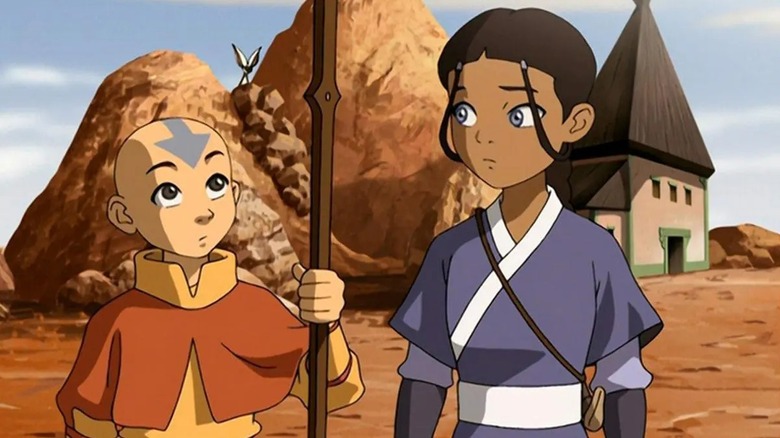
When “Avatar: The Last Airbender” debuted in 2005, no one expected it to become the cultural institution it has turned into. The series told a simple story of a wandering hero tasked with great responsibility, echoing the hero’s journey of countless protagonists, from “Star Wars” to “The Lord of the Rings.” What set “Avatar” apart was its expansive cast of characters, each drawing from real-world cultures across Asian and indigenous American communities.
This multicultural approach gave fans around the world representation in an animated marketplace that rarely provided it. Airing on Nickelodeon, the series grew up alongside its audience, replacing Season 1’s wacky childish antics with full-on warfare with deadly stakes by Season 3, all while still maintaining the humanity of its heroes and villains.
The series won several Annie Awards, a Primetime Emmy, and a Peabody over its three seasons. It was followed by a sequel series, “The Legend of Korra,” and M. Night Shyamalan’s much-maligned live-action film that lost the plot on what made “Avatar” so popular. Luckily, the “Avatar: The Last Airbender” franchise’s future is bright. The live-action Netflix series debuted to a strong reception from fans and newcomers alike and was quickly renewed for a complete three-season run that will retell the original series’ complete story — and yes, that includes Toph.
Creators and WWE superfans DiMartino and Konietzko are not involved with the live-action show, but they will soon debut a brand-new animated series in the world of “Avatar” titled “Seven Havens.” The series will follow a young Earthbender who discovers she’s the new Avatar, but with a twist; rather than save humanity, she is destined to destroy it.